A visitor visa is not an immigration program, but it can be the start of one
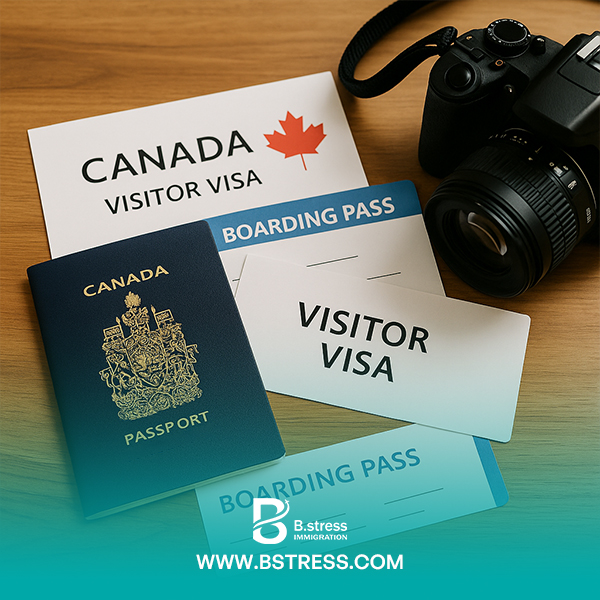
A Canadian visitor visa is a counterfoil placed in your passport. It shows that you meet the requirements to enter Canada temporarily as a visitor.
On this page we explain the requirements for a Canadian visitor visa in detail. Keep in mind that a visitor visa does not on its own help you immigrate. It only allows you to enter Canada, although it can be a starting point.
What you need to know
Who needs a Canadian visitor visa?
Most travellers need a visitor visa to travel to Canada. You may also need one if you are transiting through a Canadian airport on the way to another country. A visitor visa (temporary resident visa) is an official document placed in your passport that shows you meet the requirements to travel to Canada.
How long can you stay in Canada?
Most visitors can stay for up to six months. At the port of entry, the border services officer may allow you to stay for a shorter or longer period. In that case, the date you must leave will be written in your passport, or you may be given a document called a visitor record that shows the date.
If your passport is not stamped, you can stay for six months from the day you entered Canada, or until your passport expires, whichever comes first.
Check whether you need a visitor visa before you apply
You may need a visitor visa or an electronic travel authorization (eTA). The entry document you need depends on:
- the type of travel document you will use;
- the country that issued your travel document;
- your nationality;
- how you will travel to Canada.
You can check whether you need a visa by answering a few questions on the IRCC website: click here.
Who can get a Canadian visitor visa?
To get a visitor visa, you must meet some basic requirements. You must:
- have a valid travel document, such as a passport;
- be in good health;
- have no criminal or immigration-related convictions;
- convince an immigration officer that you have ties, such as a job, home, financial assets or family, that will take you back to your home country;
- have enough money for your stay. The amount depends on how long you will stay and where, for example in a hotel or with friends or family;
- you may also need a medical exam and a letter of invitation from someone who lives in Canada.
Some people are inadmissible to Canada, which means they are not allowed to enter. You can be inadmissible for several reasons, including involvement in:
- criminal activity;
- human rights violations;
- organized crime.
You can also be inadmissible for security, health or financial reasons.
What to know about visitor visa documents
The reason for your trip determines how you apply and which documents you submit. Below are the documents for each purpose of travel. Keep in mind that:
- not every document listed is mandatory; some may be optional;
- the list does not include every document that could support your application; you may need others;
- you should only submit documents that show you are eligible;
- even if you submit every document listed, there is no guarantee IRCC will approve your application;
- you may be asked for more information.
Documents required for a Canadian visitor visa
The documents depend on the purpose of your visit.
Visiting Canada as a tourist
- Identity document, such as a passport (regular, official or diplomatic), or a refugee travel document for non-citizens.
- Photo
- Translated civil documents, such as birth certificate and national ID card
- Employment information, which varies by occupation: a letter from your employer showing that you have a stable job you will return to, and, if applicable, that your employer is covering your trip. Business owners should provide evidence of their business.
- Form IMM 5257, the main visitor visa application form
- Form IMM 5476, if you use a representative. Family members or third parties applying on the applicant’s behalf must complete this form.
- Family Information form (IMM 5645), required for every applicant aged 18 or older
- Schedule 1
- Travel history: previous travel to Canada or other countries shows that you have obtained visas before. Provide copies of previous passports and visas used in the last 10 years, entry and exit stamps, study or work permits showing your stays abroad, and expired or valid visas.
- Travel itinerary: documents showing how long and why you will stay in Canada, such as flight details, proof of accommodation or event registration.
- Bank statements: these help the officer assess whether you have enough money to support yourself in Canada. They should include the bank’s name and contact information, your name and address showing the account is yours, and at least six months of account history, including the balance and total deposits and withdrawals.
Visiting Canada for business
All of the documents listed for tourists, plus:
- Letter of invitation: a letter from a Canadian business or company explaining the purpose of your visit, addressed to you and written on the company’s behalf. Learn more about this letter.
Visiting a spouse or partner who has sponsored you for permanent residence
All of the documents listed for tourists, plus:
- Form IMM 5409, the Statutory Declaration of Common-law Union, if applicable
- Letter of invitation from your spouse or partner in Canada explaining the reason for your trip. See the details of this letter.
Visiting family, relatives or friends
All of the documents listed for tourists, plus:
- Letter of invitation from the family member who lives in Canada, explaining the reason for your trip.
- Proof of your relationship with the person inviting you, such as a marriage certificate, Form IMM 5409, a birth certificate or another official document naming you as a parent. See the details of this letter.
How to improve your chances
These steps can make a real difference:
- Have a good travel history. You may have heard that a Schengen visa helps with a Canadian visa. In fact, what helps is travel history: showing that you have travelled in recent years and now plan to visit Canada. Because Schengen visas are also hard to obtain, having one is valuable.
- Submit genuine documents. Fabricated documents often contain inconsistencies, such as conflicting dates or mismatched details, that officers notice. Never submit false documents.
- Show strong finances, as much as you can.
- Show ties to your home country that give you reason to return, such as a good business, close family (especially parents) and property.
- Include a letter of invitation. An invitation does not guarantee a visa, but without an invitation or a convincing travel plan, approval is very difficult. An invitation from immediate family is best, but friends or other relatives can also invite you.
Applying on paper in special cases
If you need a visitor visa, you must generally apply online. You can apply on paper only if:
- you cannot apply online because of a disability; or
- you are travelling with an identity or travel document issued to a refugee, a stateless person or a non-citizen.
The application package includes an instruction guide and all the forms you need. Read the guide carefully before you start. Application fees are not refundable, so make sure you need a visitor visa before you apply. Each applicant must complete and submit their own form, and forms for children under 18 must be signed by a parent or guardian. You pay the fees when you submit your application; in most cases the fee covers processing for you and family members applying with you. If it is your first application, you must also pay the biometrics fee when you apply, unless you are exempt, or your application will be delayed.
If you apply on paper, we recommend using a courier or postal service with tracking, so you have proof that your application reached IRCC. Family members should send their individual applications in one package, which the principal applicant sends to the office that will process it.
If you need to give biometrics and are applying on paper, submit your application in person at a visa application centre (VAC). VAC staff will check that your application is complete and that you have paid the correct fees before you give your biometrics.
Biometrics
You need to give biometrics (fingerprints and a digital photo) for this visa, and you pay the biometrics fee when you apply. IRCC keeps your biometrics for 10 years from the date you last gave them. The steps are:
- Pay the biometrics fee when you apply.
- Wait for your biometric instruction letter (BIL). You must bring it with you.
- Book an appointment at a biometrics collection centre.